
On the surface, static and dynamic websites appear the same, so what’s the difference?
Knowing the distinctions between static vs. dynamic is essential and it mostly involves the site’s end goal.
To help you understand the difference, let’s break down what it means for a website to be static or dynamic.
The word static refers to something that is fixed, it doesn’t move or change in any way.
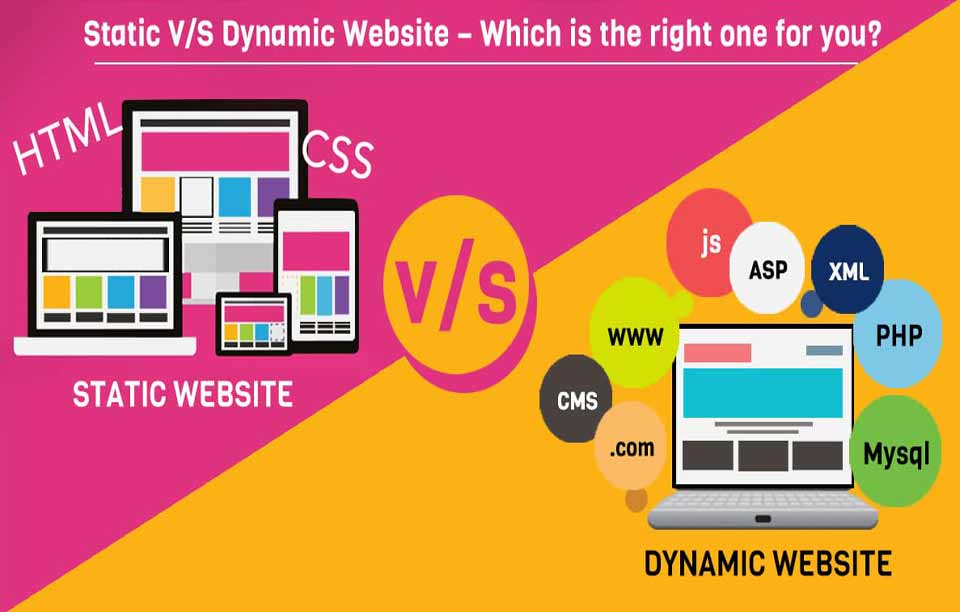
Static websites are purely informational and display the same content for every user, usually written in HTML (HyperText Markup Language).
Static web pages are written in languages using HTML (page content), CSS (for layout) and JavaScript (to add limited dynamic interaction – like clicking a button to submit a form).
With static web pages, when a server receives a request for a page, it immediately sends a response with no additional processing. This is what makes a static website fast.
If you only need a small website, opting for a static website is the proper choice. Building and maintaining it doesn’t take as much time or effort as in the case of dynamic websites.
The word dynamic refers to elements that are continuously changing, interactive and functional.
Dynamic websites make use of programming and databases in addition to HTML.
A dynamic website accesses content from a database and passed to the CMS (Content Management System) to deliver the content.
For pages that require updating frequently, the data can be added to the database and served on request, published on a specific date and time.
They are more complex in terms of building and design, but they are also more versatile.
If you want to grow your website as you go, add pages and content, add a blog or similar, a dynamic website will be your best choice.
Reach customers – grow your business
Business Hours:
Mon-Fri: 9am til 5pm
Website design, domain names, hosting, email, keyword rank reporting & search engine optimisation
Login to your account